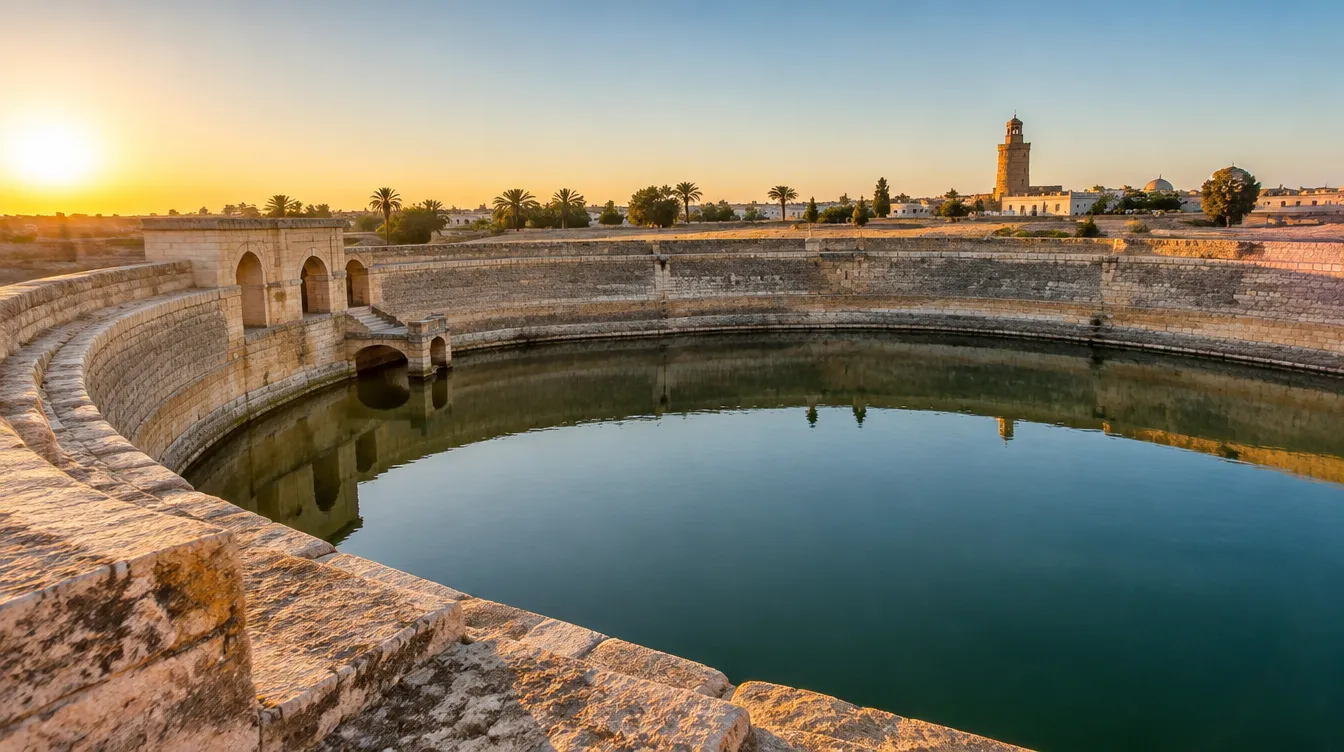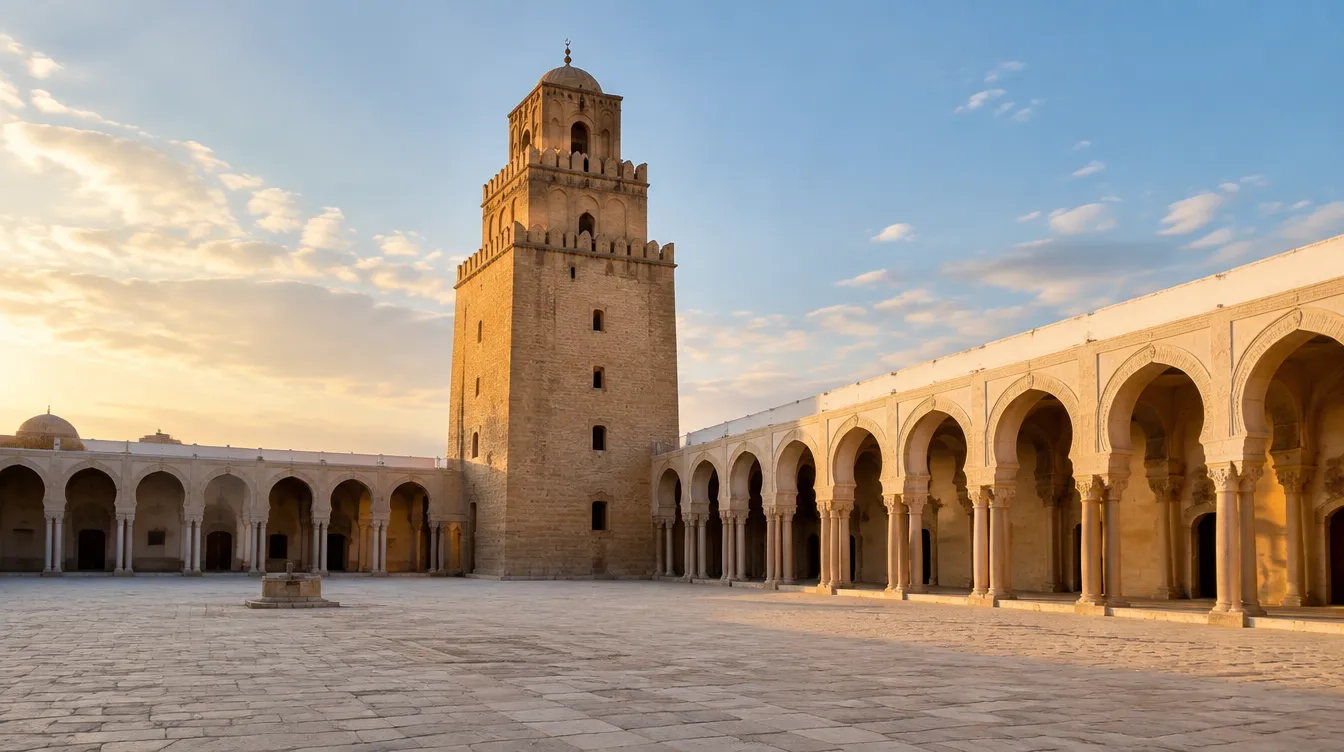
The Great Mosque (Mosque of Uqba) is the city’s main sight and an active place of worship. Hours and access rules can change, so treat the points below as a guide and confirm on arrival. For history and architecture, read our main Great Mosque guide.
When to go
- Morning is usually the calmest and coolest time, and the light on the courtyard is beautiful.
- Visits are normally paused during the five daily prayers, so plan around them. Check local prayer times for the day.
- Friday around midday is the congregational prayer and the busiest time. Visitors are best advised to come another day.
- During Ramadan and the Mawlid, expect crowds and changed hours.
Entry for visitors
- Non-Muslims are generally welcome in the courtyard and may see the prayer hall only from the entrance. Rules are decided on site, so follow the staff.
- A ticket is usually required for visitors, and it may be combined with other monuments. Ask at the entrance for the current price and what it includes. We do not quote a fee here.
- Carry small notes of Tunisian dinar.
Dress and behaviour
- Shoulders and knees covered for everyone; women should bring a scarf for the head.
- Remove shoes where indicated, speak quietly and never walk in front of someone praying.
- Ask before taking photographs, and do not photograph worshippers.
Make it a half day
Pair the mosque with a medina walk and the Mosque of the Three Doors and Sidi Sahab. See our visitor tips.
Draft content: confirm current hours, ticket price and access rules before publishing.